
Bodywork · The VELOURA Journal
The art of present, intentional touch
How attention, pace and listening turn practical skills into thoughtful, respectful care.
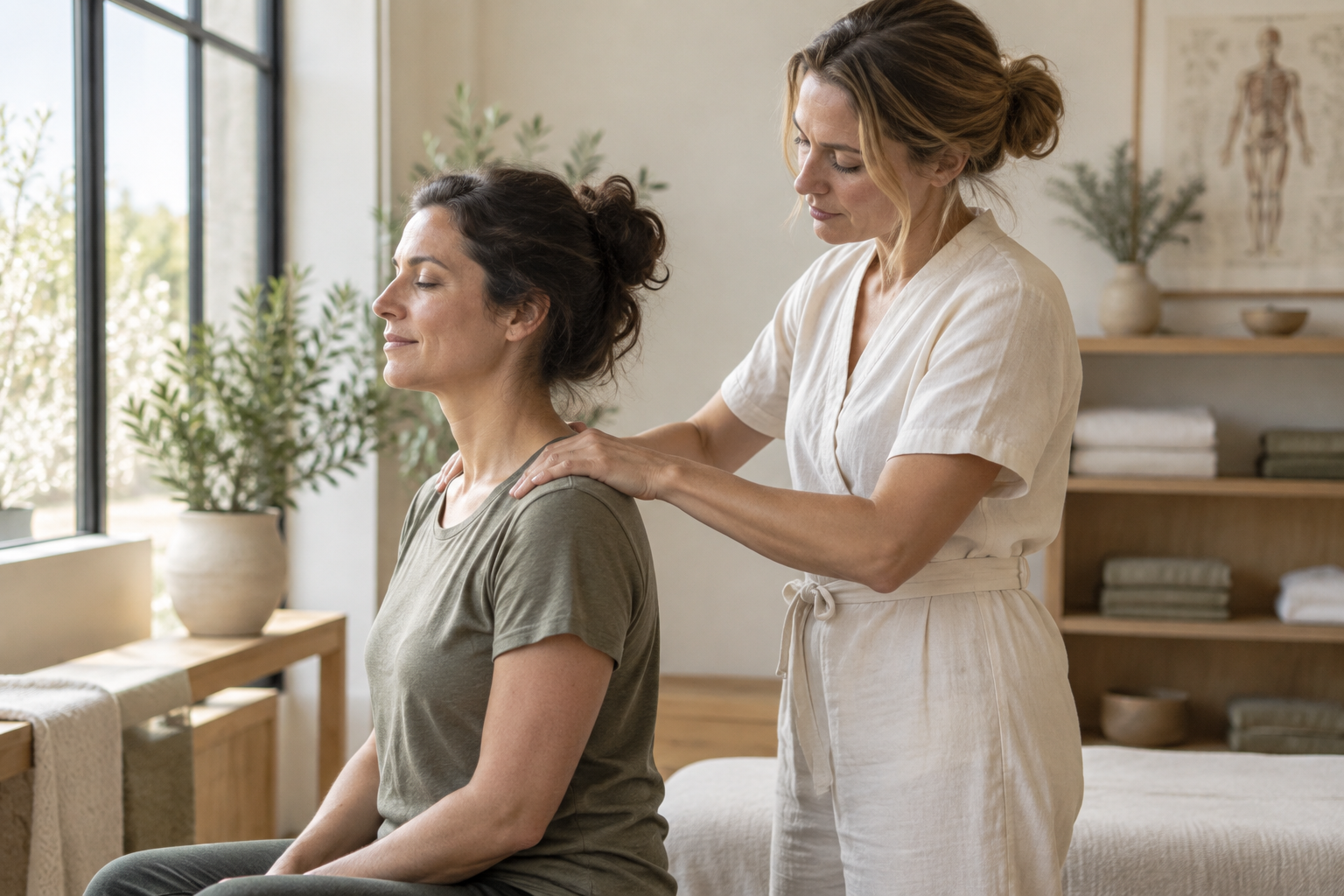
A bodywork session begins before the first technique. It begins in the way a practitioner welcomes someone, listens to their expectations and explains what will happen next. These ordinary moments express an approach to care: the person receiving it has a voice, preferences and the freedom to change their mind.
At VELOURA Academy, practical bodywork sits alongside communication, psychological awareness and professional ethics. Within that philosophy, intentional touch means knowing why you are choosing an approach and remaining attentive to the person in front of you.
Start with a conversation
Leave room for the client to describe what they are hoping for, what they would prefer to avoid and any questions they have. Explain the proposed session in plain language, including what it involves and where touch is planned. Agree on boundaries before beginning, and make it clear that the client can ask for an adjustment or stop at any point.
A useful question is, “What would help you feel comfortable during today’s session?” Listen without rushing to interpret the answer. Someone may want more explanation; someone else may value quiet. Neither preference needs to match your own.
Let attention guide your pace
It is easy, especially while learning, to concentrate on remembering a sequence. Give equal attention to the transitions: explaining a change, checking comfort and allowing time for a response. A session does not need to feel hurried simply because there is a plan to follow.
Use clear, neutral questions such as, “Would you prefer less pressure, the same, or a pause?” Avoid treating silence as confirmation. Observation can prompt a check-in, but it cannot replace the client’s account of their experience.
Keep care within clear boundaries
Warmth and professionalism belong together. Respect privacy, follow the hygiene and draping practices taught in your training, and use techniques within your competence. Be honest about what you can offer. When a request falls outside your knowledge or role, acknowledging that limit is part of responsible practice.
Psychological awareness also involves recognising that people experience personal space and touch differently. There is no need to assign a story to someone’s reaction. Ask, listen and respond to the preference they share.
Make reflection part of the craft
After a session, consider the quality of your communication as well as your technique. Did you explain changes clearly? Did you leave enough time for feedback? What question would be useful to take to a tutor? Keep any learning reflections free of identifying client details.
Professional confidence is something to develop through education, supervised practice and honest feedback. Our aim is to help practitioners build that confidence with integrity and curiosity.
Explore Massage & Bodywork education or learn more about learning in person at VELOURA.